
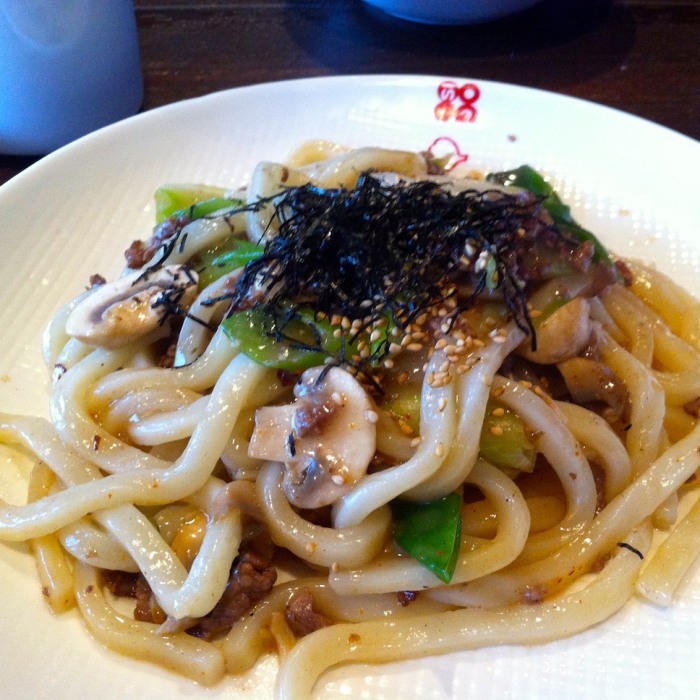
Yaki Udon
Yaki Udon is a classic Japanese vegetarian that holds a distinguished place in traditional cooking. Celebrated for its wholesome ingredients and time-honored preparation, this dish brings authentic regional character to the home kitchen.
Carefully prepared featuring Udon Noodles, Sesame Seed Oil, Onion, Cabbage, Shiitake Mushrooms, Spring Onions, Mirin, Soy Sauce, Caster Sugar and Worcestershire Sauce, the ingredients are simmered and seasoned to achieve a satisfying depth of flavor. True to traditional Japanese cooking, the dish focuses on emphasizing natural umami, precise seasoning, and delicate broths.
In authentic Japanese tradition, Yaki Udon is best presented with steamed short-grain rice, miso soup, and pickled vegetables.
If you enjoy authentic Japanese cooking, be sure to also explore our recipe for Chicken Karaage.
Rate this recipe
Ingredients
- Udon Noodles250g
- Sesame Seed Oil2 tbs
- Onion1 sliced
- Cabbage0.25
- Shiitake Mushrooms10
- Spring Onions4
- Mirin4 tbsp
- Soy Sauce2 tbs
- Caster Sugar1 tblsp
- Worcestershire Sauce1 tblsp
Step-by-Step Instructions
9 stepsInteractive Cook Mode: Click any step or circle to check it off as you cook.
Boil some water in a large saucepan.
Add 250ml cold water and the udon noodles. (As they are so thick, adding cold water helps them to cook a little bit slower so the middle cooks through).
If using frozen or fresh noodles, cook for 2 mins or until al dente; dried will take longer, about 5-6 mins.
Drain and leave in the colander.
Heat 1 tbsp of the oil, add the onion and cabbage and sauté for 5 mins until softened.
Add the mushrooms and some spring onions, and sauté for 1 more min.
Pour in the remaining sesame oil and the noodles.
If using cold noodles, let them heat through before adding the ingredients for the sauce – otherwise tip in straight away and keep stir-frying until sticky and piping hot.
Sprinkle with the remaining spring onions.
👨🍳 Chef's Culinary Notes
Cultural Heritage
Yaki Udon reflects the timeless heritage of traditional Japanese home cooking, emphasizing natural umami, precise seasoning, and delicate broths. Prepared for generations for family gatherings and celebrations, it represents the heart of regional culinary identity.
Dietary Substitutions
To make this gluten-free, substitute with high-quality brown rice or corn-based pasta, reducing boiling time by 1–2 minutes as gluten-free pasta softens more quickly.
Chef Technique Tips
Always cook pasta until just shy of al dente in generously salted water, and reserve half a cup of the starchy cooking water before draining. Tossing the pasta with the sauce and a splash of this water creates a glossy, cohesive emulsion that clings to every bite.
Recipe Feedback & Reviews
Have you tried making this recipe? Share your experience, modifications, or tips with fellow cooks!
Please log in to leave feedback on this recipe.
Community Feedback (0)
No feedback yet. Be the first to share how this recipe turned out!