
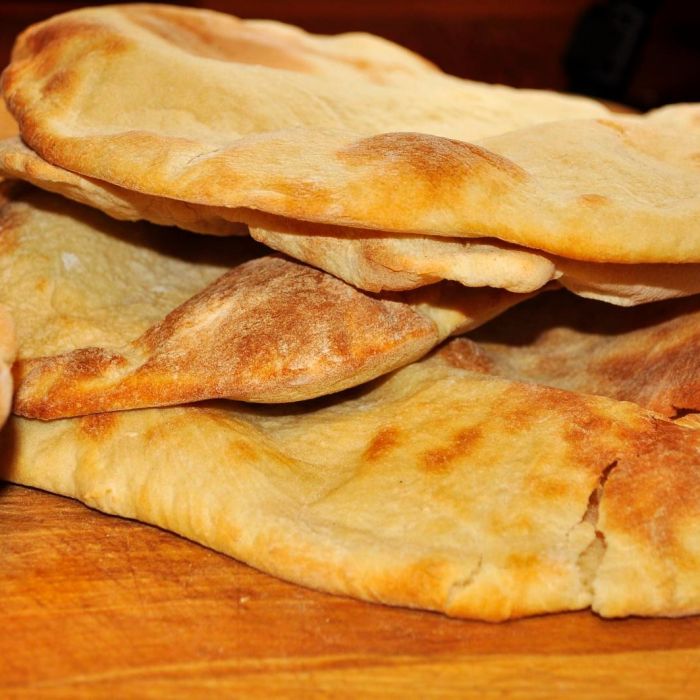
Syrian Bread
Syrian Bread is a classic Syrian miscellaneous that holds a distinguished place in traditional cooking. Celebrated for its wholesome ingredients and time-honored preparation, this dish brings authentic regional character to the home kitchen.
Carefully prepared featuring Flour and Yeast, the ingredients are simmered and seasoned to achieve a satisfying depth of flavor. The cooking process allows natural aromas to develop, ensuring each portion is both hearty and flavorful.
Serve hot alongside fresh bread, steamed grains, or a crisp seasonal salad for a well-rounded dining experience.
If you enjoy authentic Syrian cooking, be sure to also explore our recipe for Syrian Rice With Meat.
Rate this recipe
Ingredients
- Water1 and 1/8 cup
- Vegetable Oil2 tblsp
- Sugar1/2 teaspoon
- Salt1 1/2 tsp
- Flour3 Cups
- Yeast1 1/2 tsp
Step-by-Step Instructions
9 stepsInteractive Cook Mode: Click any step or circle to check it off as you cook.
Place ingredients in the pan of the bread machine in the order recommended by the manufacturer.
Select Dough cycle; press Start.
When the Dough cycle is almost complete, preheat the oven to 475 degrees F (245 degrees C).
Turn dough out onto a lightly floured surface.
Divide into eight equal pieces and form into rounds.
Cover the rounds with a damp cloth and let rest.
Roll dough into thin flat circles, about 8 inches in diameter.
Cook two at a time on preheated baking sheets or a baking stone until puffed up and golden brown, about 5 minutes.
Repeat for remaining loaves.
👨🍳 Chef's Culinary Notes
Cultural Heritage
Syrian Bread carries a rich culinary tradition rooted in regional home cooking. Developed over generations, the recipe highlights wholesome local ingredients prepared with time-honored kitchen techniques.
Dietary Substitutions
If using instant dry yeast instead of active dry yeast, you can mix it directly into the dry ingredients without proofing first, reducing wait time by 15 minutes.
Chef Technique Tips
Always ensure liquids used to activate the yeast are comfortably lukewarm (around 38°C–42°C / 100°F–108°F); liquid that is too hot will kill the yeast, while cold liquid delays proofing. Keep the dough in a warm, draft-free spot to rise.
Recipe Feedback & Reviews
Have you tried making this recipe? Share your experience, modifications, or tips with fellow cooks!
Please log in to leave feedback on this recipe.
Community Feedback (0)
No feedback yet. Be the first to share how this recipe turned out!