
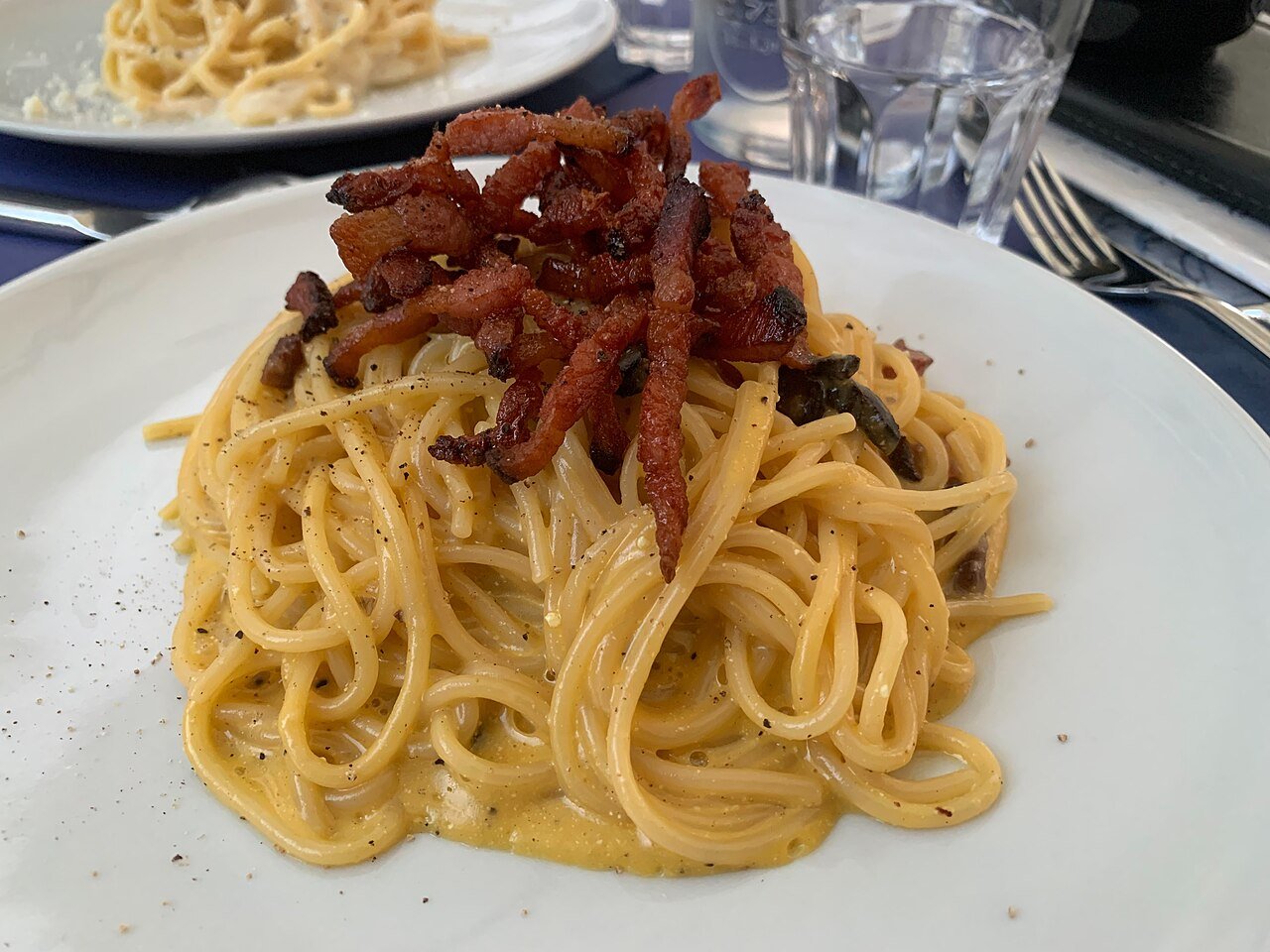
Spaghetti Carbonara
Spaghetti alla Carbonara is a Roman culinary masterwork celebrated for its minimalist elegance. Authentic Roman carbonara uses precisely five ingredients: spaghetti, cured pork jowl (guanciale), fresh egg yolks, aged Pecorino Romano cheese, and coarsely cracked black pepper—with no cream, peas, or garlic whatsoever.
The magic of carbonara is emulsion. Rendered guanciale fat is combined off the heat with whisked egg yolks, grated Pecorino, and starchy pasta water. Tossing the hot pasta vigorously off the flame allows the residual heat to gently pasteurize the egg into a glossy, velvety coating without scrambling.
Plate immediately onto warm pasta bowls, crowned with crisp lardons of guanciale, extra freshly ground black pepper, and another dusting of Pecorino Romano.
If you appreciate classic Italian dishes, you may also enjoy exploring our authentic Pizza Margherita.
Rate this recipe
Ingredients
- Spaghetti200 g
- Guanciale (cut into short strips; pancetta works)100 g
- Egg yolks3 pieces
- Whole egg1 piece
- Pecorino romano (finely grated)60 g
- Black pepper (coarsely ground)1 tsp
- Salt for the waterTo taste
Step-by-Step Instructions
6 stepsInteractive Cook Mode: Click any step or circle to check it off as you cook.
Bring a large pot of water to the boil and salt it properly — this is the only salt in the dish, since the cheese and the guanciale bring their own.
Put the guanciale into a cold pan and turn the heat to medium. The fat should render gradually and the pieces turn golden and crisp at the edges, about 6 to 8 minutes.
While the fat renders, beat the yolks, the whole egg, the grated pecorino and the pepper into a thick paste. Let it sit at room temperature so it does not seize when it meets hot pasta.
Cook the spaghetti a minute short of the packet time. Before draining, save a cup of the cooking water — the sauce will not come together without it.
Take the pan off the heat, add the pasta and toss it through the fat. Let the pan cool for twenty seconds — it should be warm, not hot.
Pour in the egg mixture and stir hard, adding pasta water a spoonful at a time until the sauce turns glossy and coats every strand. Serve immediately.
👨🍳 Chef's Culinary Notes
Cultural Heritage
Born in mid-20th-century Rome, the recipe was first recorded in the post-WWII era, with roots tied to the Apennine charcoal workers (carbonari) who carried durable staples of pasta, cured pork, and hard cheese into the mountains.
Dietary Substitutions
If authentic Italian guanciale is difficult to source, quality unsmoked pancetta or thick-cut bacon can serve as an accessible stand-in. Parmigiano-Reggiano can soften the pungent tang of 100% Pecorino Romano.
Chef Technique Tips
Never add the egg-and-cheese mixture while the skillet is on direct flame. Remove the pan from heat entirely for 30 seconds before tossing in the eggs; direct flame will turn your silky sauce into scrambled eggs.
Recipe Feedback & Reviews
Have you tried making this recipe? Share your experience, modifications, or tips with fellow cooks!
Please log in to leave feedback on this recipe.
Community Feedback (0)
No feedback yet. Be the first to share how this recipe turned out!