
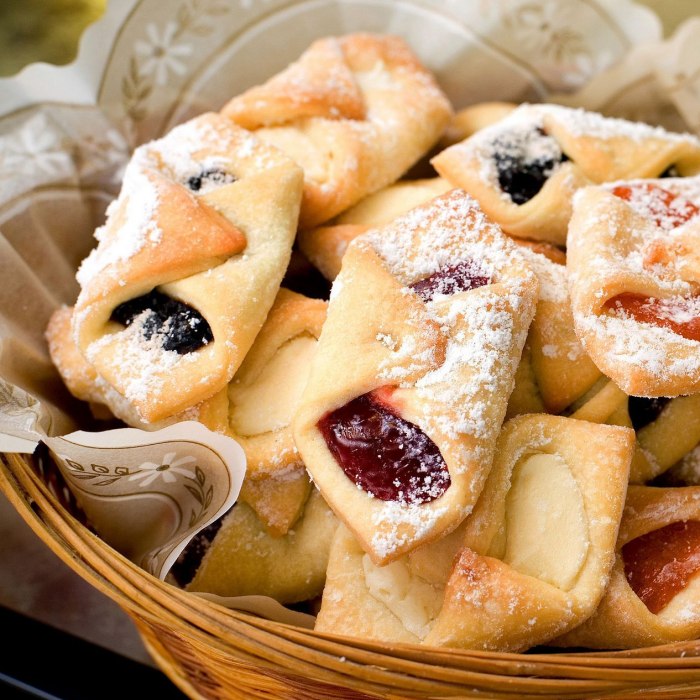
Rogaliki (Polish Croissant Cookies)
Rogaliki (Polish Croissant Cookies) is a classic Polish dessert that holds a distinguished place in traditional cooking. Celebrated for its wholesome ingredients and time-honored preparation, this dish brings authentic regional character to the home kitchen.
Carefully baked or prepared featuring Butter, Egg Yolks, Cream Cheese, Baking Powder, Flour and Jam, the components balance delicate sweetness and satisfying texture.
Enjoy warm or chilled alongside fresh vanilla custard, whipped cream, or a freshly brewed cup of coffee or tea for a comforting finish to your meal.
If you enjoy authentic Polish cooking, be sure to also explore our recipe for Mini Bundt Cakes.
Rate this recipe
Ingredients
- Butter1 cup
- Egg Yolks3
- Cream Cheese8 oz
- Baking Powder1 tsp
- Flour3 cups
- Jam1 Jar
Step-by-Step Instructions
14 stepsInteractive Cook Mode: Click any step or circle to check it off as you cook.
In a medium bowl mix egg yolks, philly cheese and baking powder using a hand held mixer.
Carefully start adding the flour.
When the mixture will not be mixing well, and will look like wood chips, put away the blending mixer and using your hands knead the dough.
Create a roll and cover in foil and freeze for 15 minutes.
At this time preheat the oven to 375.
Take the dough out and separate into two.
Roll and cut out 3 inch trangles.
Make as many as you can and on centre of each put a small spoon of jam.
Roll them into a croissant shape.
Place the croissants onto a greased cookie sheet, and bake for 10-12 minutes or until golden.
Repeat with the rest of the dough.
When you take them out, put aside and sprinkle with powdered sugar on top.
This makes about 3 batches of 20 cookies each.
Total count about 60 cookies.
👨🍳 Chef's Culinary Notes
Cultural Heritage
Rogaliki (Polish Croissant Cookies) carries a rich culinary tradition rooted in regional home cooking. Developed over generations, the recipe highlights wholesome local ingredients prepared with time-honored kitchen techniques.
Dietary Substitutions
If using instant dry yeast instead of active dry yeast, you can mix it directly into the dry ingredients without proofing first, reducing wait time by 15 minutes.
Chef Technique Tips
Always ensure liquids used to activate the yeast are comfortably lukewarm (around 38°C–42°C / 100°F–108°F); liquid that is too hot will kill the yeast, while cold liquid delays proofing. Keep the dough in a warm, draft-free spot to rise.
Recipe Feedback & Reviews
Have you tried making this recipe? Share your experience, modifications, or tips with fellow cooks!
Please log in to leave feedback on this recipe.
Community Feedback (0)
No feedback yet. Be the first to share how this recipe turned out!