
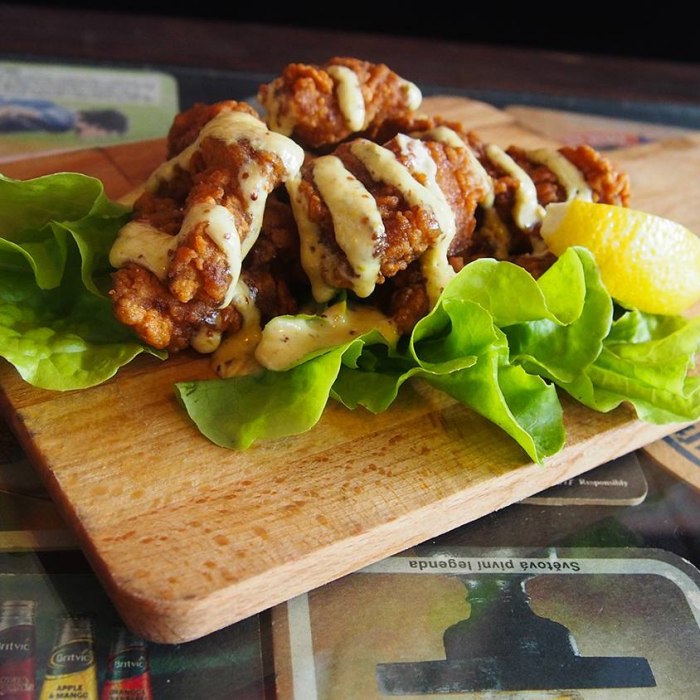
Chicken Karaage
Chicken Karaage is a classic Japanese dish that holds a distinguished place in traditional cooking. Celebrated for its wholesome ingredients and time-honored preparation, this dish brings authentic regional character to the home kitchen.
Carefully prepared featuring Chicken, Ginger, Garlic, Soy sauce, Sake, Granulated sugar, Potato starch and Lemon, the ingredients are simmered and seasoned to achieve a satisfying depth of flavor. True to traditional Japanese cooking, the dish focuses on emphasizing natural umami, precise seasoning, and delicate broths.
In authentic Japanese tradition, Chicken Karaage is best presented with steamed short-grain rice, miso soup, and pickled vegetables.
If you enjoy authentic Japanese cooking, be sure to also explore our recipe for Katsu Chicken Curry.
Rate this recipe
Ingredients
- Chicken450 grams Boneless skin
- Ginger1 tablespoon
- Garlic1 clove
- Soy sauce2 tablespoons
- Sake1 tablespoon
- Granulated sugar2 teaspoon
- Potato starch1/3 cup
- Vegetable oil1/3 cup
- Lemon1/3 cup
Step-by-Step Instructions
11 stepsInteractive Cook Mode: Click any step or circle to check it off as you cook.
Add the ginger, garlic, soy sauce, sake and sugar to a bowl and whisk to combine.
Add the chicken, then stir to coat evenly.
Cover and refrigerate for at least 1 hour.
Add 1 inch of vegetable oil to a heavy bottomed pot and heat until the oil reaches 360 degrees F.
Line a wire rack with 2 sheets of paper towels and get your tongs out.
Put the potato starch in a bowl
Add a handful of chicken to the potato starch and toss to coat each piece evenly.
Fry the karaage in batches until the exterior is a medium brown and the chicken is cooked through.
Transfer the fried chicken to the paper towel lined rack.
If you want the karaage to stay crispy longer, you can fry the chicken a second time, until it's a darker color after it's cooled off once.
Serve with lemon wedges.
👨🍳 Chef's Culinary Notes
Cultural Heritage
Chicken Karaage reflects the timeless heritage of traditional Japanese home cooking, emphasizing natural umami, precise seasoning, and delicate broths. Prepared for generations for family gatherings and celebrations, it represents the heart of regional culinary identity.
Dietary Substitutions
If you need to accommodate dietary restrictions, chicken can be substituted with an equivalent volume of seasonal vegetables, legumes, or a protein alternative of your preference.
Chef Technique Tips
Season in stages rather than all at once at the end. Salting components as they cook draws out excess moisture, intensifies natural sugars, and builds harmonious depth of flavor throughout the dish.
Recipe Feedback & Reviews
Have you tried making this recipe? Share your experience, modifications, or tips with fellow cooks!
Please log in to leave feedback on this recipe.
Community Feedback (0)
No feedback yet. Be the first to share how this recipe turned out!