Yemeni Food Today: Traditional Dishes and the Hunger Crisis
In a Yemeni kitchen, one meal might be built around a pot of saltah; another might be rice and meat shared from a large platter. There’s no single menu that represents every household. Food changes with the region, the season, what’s available and what a family prefers. Bread, grains, spices, meat, coffee and honey all have places in the country’s varied food culture.

For many people, deciding what to cook is only part of the challenge. Conflict, economic strain and the cost of getting food to markets have made it harder for millions of people in Yemen to afford enough to eat. Yemeni food has its own history and traditions. For many families, what goes into the pot depends on what they can afford that week. (WFP, 2 October 2026)
Yemeni Cuisine: What Makes Yemeni Food Distinctive
Yemen stretches from highlands to coast, and its cooking reflects that range. Ingredients and customs vary between regions and households, so a dish may have more than one familiar form.
Spices, Bread and Rice in Traditional Yemeni Food
Cumin, coriander, turmeric and chilli appear in different combinations; there isn’t one spice mix that defines all Yemeni cooking. Bread often goes with stew. Rice is the base for mandi and 🍽️zurbian. Aseed starts with flour and boiling water. It’s stirred until it comes together into a thick, elastic mass. Lamb and other meats appear in many dishes, depending on the household and occasion.
Malooga is one type of yeasted flatbread. Qishr is made with dried coffee husks; ginger is a common addition. Honey is eaten with breads and sweets. These are only a few examples of what you’ll find in Yemeni kitchens. Ask how a dish is made and the answer may depend on which region or family you ask. (Yemen Embassy: Must Try, DLIFLC: Yemen in Perspective)
Yemen’s Trading History and Its Influence on Yemeni Cuisine
Incense once moved along South Arabia’s caravan routes. Yemeni coffee was shipped through Mocha’s port. The port’s name later became associated with coffee. (UNESCO World Heritage Centre, Smithsonian Institution)
Families pass recipes along, but a dish may change a little from one kitchen to another. What goes into the pot can depend on the region, the market and the cook.
Yemeni Hospitality and the Tradition of Sharing Meals
The midday meal is important in many Yemeni households, though schedules and customs vary. A meal might be set out where everyone can reach it, with bread passed around for the stew. A guest may be invited to share whatever’s on the table; offering food is part of how many households show hospitality. (DLIFLC: Yemeni Eating Habits)
Traditional Yemeni Dishes: Saltah, Mandi, [Fahsa](/recipes/fahsa) and More
Yemeni cooking includes dishes for everyday meals and foods often served at larger gatherings. There’s no single recipe that every household follows; ingredients and methods can differ from place to place. The descriptions here cover familiar versions rather than one definitive way to make each dish.
Saltah: A Traditional Yemeni Stew with Hilba
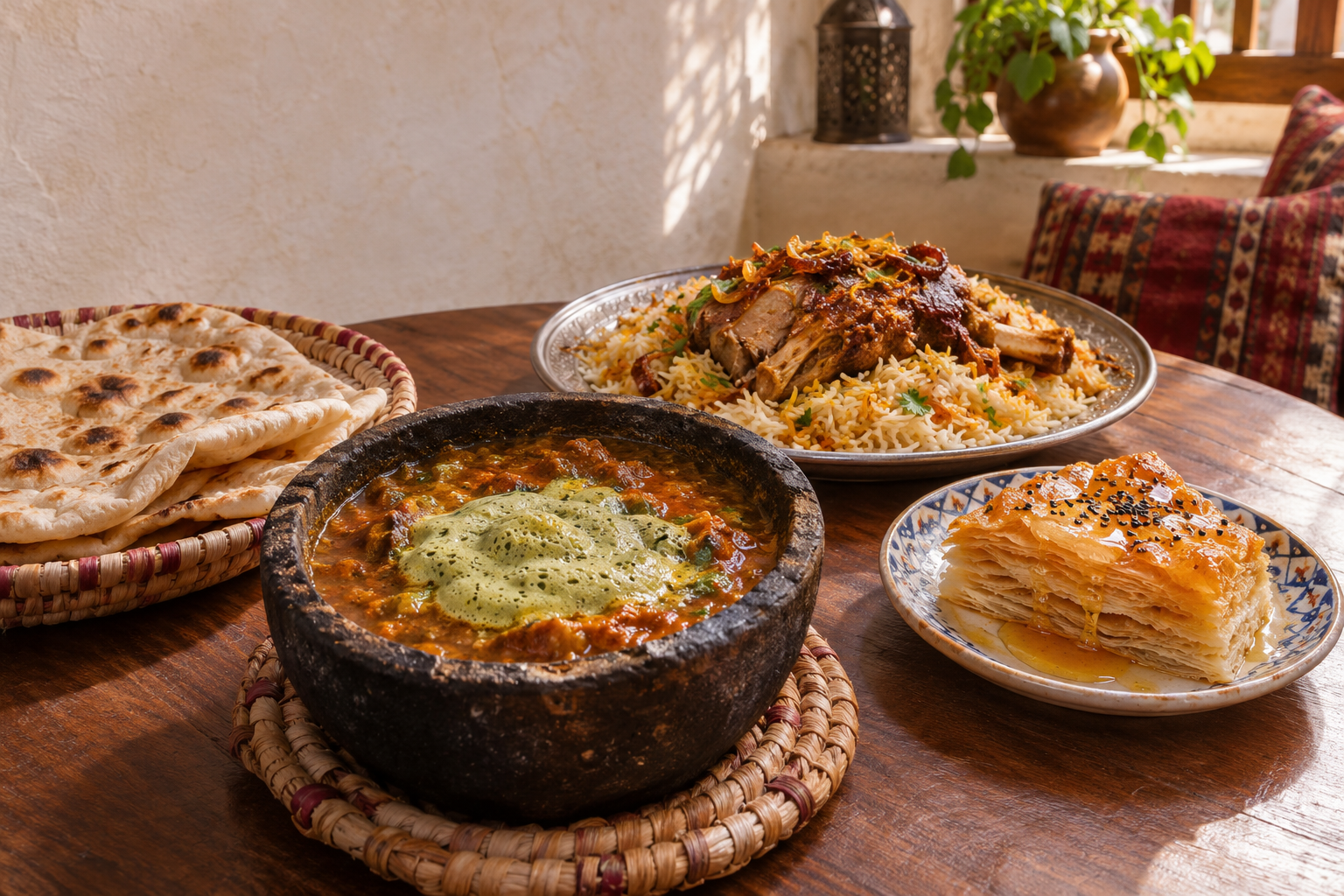
Saltah is often called Yemen’s national dish and is especially associated with the northern highlands. It’s brought to the table hot, with whipped fenugreek hilba spooned over the top. Bread is served alongside for dipping. (Yemen Embassy: Must Try)
Mandi, Fahsa and Aseed: Classic Yemeni Dishes
Mandi pairs seasoned rice with meat, often lamb or chicken. Mandi meat cooks over charcoal inside a covered tandoor. Fahsa, by contrast, is a stew. (Yemen Embassy: Must Try, DLIFLC: Yemen in Perspective)
Zurbian and [Bint al-Sahn](/recipes/bint-al-sahn): Yemeni Rice and Honey Bread
Zurbian is especially associated with Aden and is made with rice, meat, potatoes and spices. Some versions use saffron. Bint al-sahn reaches the table as a stack of baked dough layers, ready to pull apart and eat with honey. (Reuters report on zurbian, DLIFLC: Yemen in Perspective)
Yemen’s Hunger Crisis: Food Insecurity and Its Impact on Daily Meals
Food insecurity is about whether people can get enough to eat. It doesn’t describe a country’s cuisine or tell us what every household experiences. The figures below were published on different dates and cover different groups, so they aren’t directly comparable.
What WFP, FAO, UNICEF and the IPC Report on Yemen
On 2 October 2026, the World Food Programme (WFP) reported that 18.3 million people across Yemen faced acute food insecurity. In its update, WFP also said 74 percent of households it monitored in accessible areas couldn’t meet their basic food needs. That figure describes the monitored households, not every household in the country. (WFP, 2 October 2026)
UNICEF’s 25 September 2026 update said more than 2.2 million children under five were projected to be acutely malnourished during 2026, including over half a million with severe acute malnutrition. Acute malnutrition and food insecurity are related, but they measure different things: one describes a serious nutritional condition, the other whether people can access enough food. (UNICEF, 25 September 2026)
The IPC scale helps agencies describe the severity of acute food insecurity. In Phase 3, or Crisis, a household may have food gaps or may only manage basic needs by using damaging coping measures, such as selling essential assets. Phase 4, or Emergency, means larger food gaps or more severe coping. An IPC phase describes conditions across an area, not what life is like for every household there. (IPC classification guide)
Conflict, Economic Pressure and Food Access in Yemen
FAO’s country brief, dated 13 October 2026, cited an IPC projection that about 5.4 million people in government-controlled areas would face Crisis or worse levels of acute food insecurity between October and December 2026. FAO points to reduced humanitarian assistance, weak purchasing power and limited livelihood opportunities as factors affecting access to food. (FAO GIEWS, 13 October 2026)
FAO’s 5.4 million projection covers government-controlled areas. WFP’s 18.3 million estimate is nationwide, so the two figures describe different populations. Yemen imports much of its food. A disruption at a port or along a road can make supplies harder and more expensive to move. FAO forecast that cereal import requirements in 2026 would be about 5.2 million tonnes, close to the five-year average. Imports alone don’t guarantee that food is affordable or within reach; transport costs, household income and market access matter too. (WFP, 16 October 2026, FAO GIEWS)
How Food Insecurity Is Affecting Everyday Meals in Yemen
When income is low or irregular and prices are high, families have fewer options about what they can buy and how varied their meals can be. Fighting can also block roads and limit aid workers’ access to communities. The figures can’t tell us what any one family has on the table, but they show how difficult it has become for many people to get enough food.
How to Help People Affected by Yemen’s Hunger Crisis
If you want to support relief work, look at organizations that explain their programs and funding needs. The World Food Programme’s Yemen page describes its food and nutrition assistance, while UNICEF’s Yemen appeal outlines work supporting children and families. Reputable, locally led organizations may also provide assistance. To donate, use the aid group’s own website and read what it says your contribution will fund.
Yemeni cooking has a life beyond the crisis in the news. People facing hunger need attention too.
Join Our Global Culinary Table
Drop a comment below with your thoughts or explore our curated regional recipes.
💬 Join the Conversation (0)
Share your culinary experiences or ask questionsNo comments yet. Be the first to start the conversation!